Plan a realistic UK industrial-heritage day trip by checking the official site, separating indoor and outdoor time, confirming access and rechecking transport.

























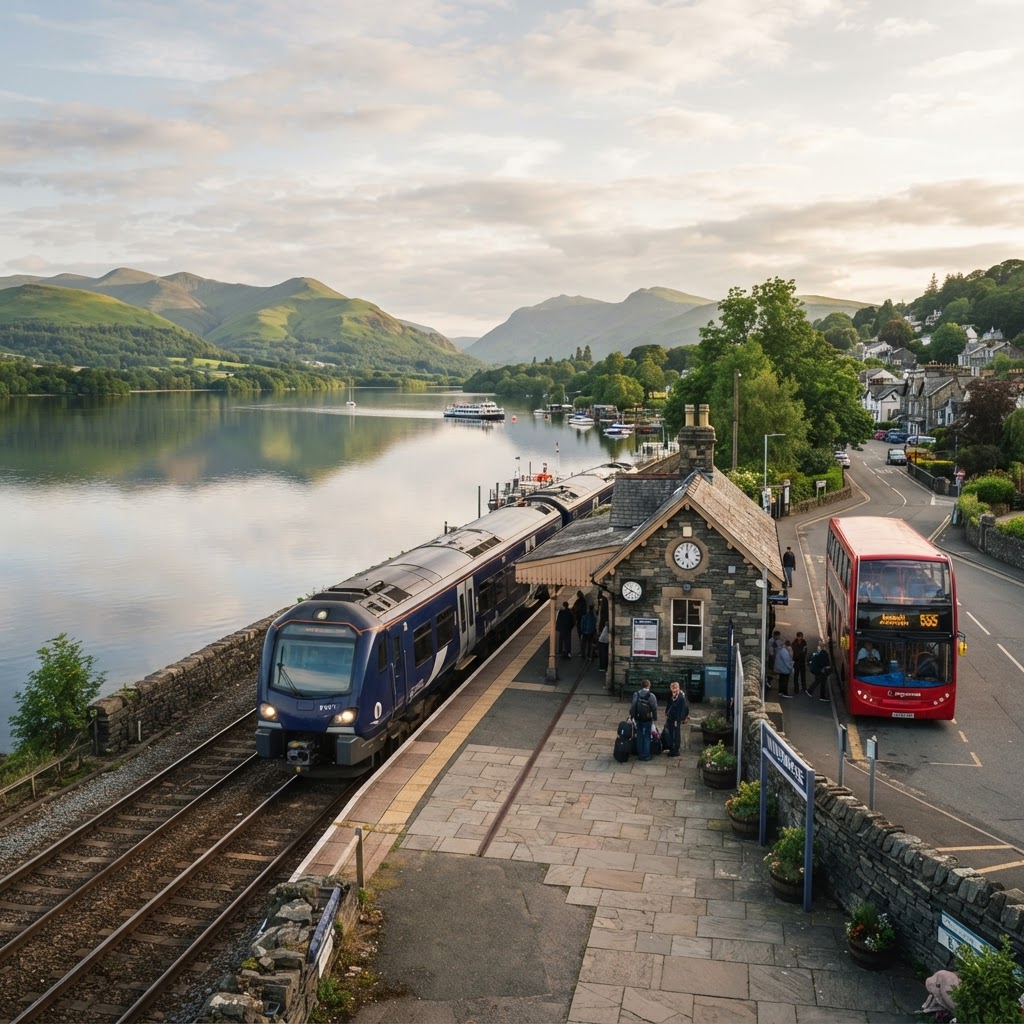
UK Trip Planning
Lake District Without a Car: What Is Realistic and How to Plan It
How to reach the Lakes by train, which bus routes do the real work, and where car-free travel takes more planning.
Most Lake District guides assume a car. The majority of visitors arrive by road, and a car does open up the quieter valleys. But a sizeable part of the Lakes, including the most popular stops on the central corridor, is reachable by train and bus.
This guide covers what that actually looks like: how to get there, which routes work without driving, and where public transport takes more planning.
Want to build a Lake District itinerary around public transport? Start with the AI Itinerary Planner and customise the route to your dates, pace and preferred base.
Journey times and fares are indicative and can vary by service and season. All costs are indicative ranges — actual prices vary by date and how far ahead you book.
How to get there by train
The main rail gateway is Oxenholme Lake District, served by Avanti West Coast from London Euston. Journey times vary by service, so check the current timetable when planning your trip. Advance fares start from roughly £35, though prices vary by date and how early you book.
Oxenholme → Windermere
Approximately 20 minutes
Northern branch line from the mainline station
Manchester → Windermere
Around 1½ hours direct
Northern services, a practical option from the North West
These are indicative journey times — check live timetables with National Rail or your operator before booking, as engineering works can affect services. When you're ready, book your train travel.
The central bus corridor: routes 555 and 599
Once you are in the Lakes, the Stagecoach 555/556 is the spine of car-free travel, connecting Windermere, Kendal, Ambleside, Grasmere and Keswick — making the most visited stops on the central corridor reachable by bus. The 599 runs between Bowness-on-Windermere, Windermere, Rydal and Grasmere, with frequency increasing in summer (up to every 20 minutes at peak times).
Eligible single bus fares are currently capped at £3 under the national fare cap, though confirm current fares and timetables directly with Stagecoach, as these change over time.
Buses run frequently between the main towns but become less frequent in the evenings and on quieter routes — always check the day's Stagecoach timetable before relying on a late service back.
What is genuinely accessible without a car
Windermere & Bowness
Fully accessible by train and local bus, with the lake cruise also an option from Bowness Pier. Orrest Head, a popular introductory walk, starts a short walk from the station.
Ambleside
Straightforward via the 555 from Windermere, roughly 30 minutes.
Grasmere
Served by both the 555 and the 599.
Keswick
Further along the 555 corridor, and a useful base for the northern Lakes.
Where car-free travel takes more planning
Service coverage and frequency thin out as you move away from the principal corridors. The western fells and remoter valleys have limited regular service, though some areas are better connected than visitors often assume: buses do operate in Langdale, and the 508 serves Ullswater. Some seasonal and weekend services also run in summer.
The realistic picture is that valley villages and popular trailheads are usually reachable with planning — seasonal services, connections, or a taxi for specific legs — while remote fells, long ridge walks, and hopping between multiple distant bases in one day are far easier with a car or a one-day car hire from Windermere.
If you do want to drive for part of your trip, see our 7-day UK road trip itinerary for a driving version of a classic UK route.
Practical notes
- Plan around bus frequency: the main corridor routes run regularly between the towns, but evening and off-corridor services are limited, so check the day's Stagecoach timetable for first and last departures rather than assuming a late return.
- Factor in walking time at each stop, especially if you plan to combine a hike with an onward bus.
- Accommodation in Windermere, Ambleside or Keswick makes car-free logistics considerably simpler than staying somewhere off the main corridor.
- For integrated rail and bus tickets, check with the operators directly.
How many days do you need
2 days
The central corridor comfortably
3 days
Adds a longer walk and a less rushed pace
4 days
Adds Ullswater or Langdale with a taxi or car-hire leg
Two days covers the central corridor comfortably: a day around Windermere and Bowness, another day up to Grasmere or Keswick. Three days adds breathing room for a longer walk and a less rushed pace. If you want to reach Ullswater or Langdale, four days with a taxi or one-way car hire for those legs is worth considering. (More on trip length in our How Many Days guide.)
Make it yours
Want to build a Lake District itinerary around public transport?
Start with the AI Itinerary Planner and customise the route to your dates, pace and preferred base.
Rather skip the planning?
Browse pre-assembled trip packages
Curated UK trips with hotels and highlights already put together.